What Are Boltless Systems and How Do They Work?

Time:2026-09-19 Author:Henry
0%

Boltless Systems are storage structures assembled without traditional nuts and bolts. They use slotted uprights, horizontal beams, locking clips, and sturdy shelf panels. The parts connect through designed openings and mechanical pressure. This creates a stable frame with fewer loose components.

Picture a warehouse aisle with steel uprights standing vertically. Workers fit beams into the slots, then tap them into place with a rubber mallet. Decking sits across the beams, forming each usable level. Shelves can often be adjusted without drilling or special equipment. That flexibility helps businesses respond to changing inventory sizes, seasonal demand, or limited floor space.

The system may look simple. Its safety depends on careful installation. Before loading shelves, users should check the manufacturer’s instructions, weight ratings, floor condition, and frame alignment. Uneven floors can affect stability. Improperly seated connectors may also create hidden weaknesses. Experienced installers inspect every connection and test the structure gradually before full use.

Boltless shelving works best when design and maintenance receive equal attention. Labels, inspections, and sensible load placement reduce everyday risks. Heavier goods should usually remain on lower levels, while lighter items belong above. Still, “boltless” does not mean effortless or indestructible. Different products use different connector designs, materials, and capacity limits. This article examines how Boltless Systems work, where they fit, and which practical details deserve closer consideration. Some assumptions may need revision. That is part of responsible planning.
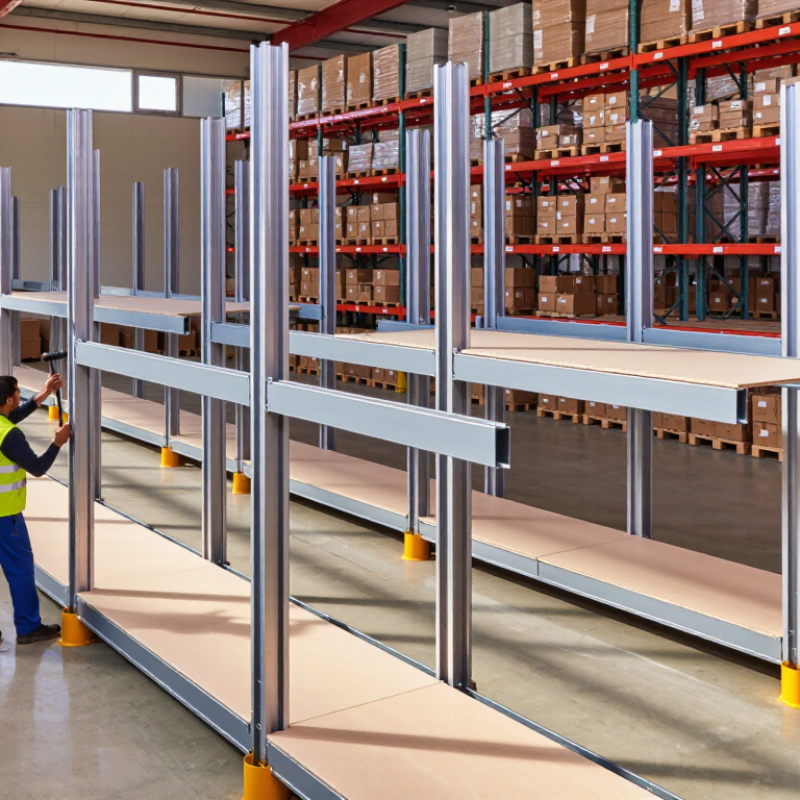
What Are Boltless Systems and How Do They Work?

Definition and Core Features of Boltless Systems

Boltless systems are storage structures assembled without traditional nuts and bolts. Their upright frames contain punched slots, while beams or shelves use tabs, hooks, clips, or locking pins. These parts connect through direct engagement, creating a stable framework with fewer loose components.

The core feature is tool-light assembly. In many designs, one person can fit a shelf by lifting the beam and pressing it into the upright slots. Height adjustments are also practical. A shelf may move upward or downward within minutes, supporting changing cartons, bins, or workshop equipment. This flexibility makes boltless systems useful in storerooms, archives, garages, and light industrial areas.

A strong system still depends on careful installation. Correct slot engagement matters. Shelves should sit level, and heavy items belong on lower levels. The stated load capacity is not universal; it depends on shelf material, span, flooring, and weight distribution. I have found that quick assembly can create false confidence. A frame may look secure while one connector remains partly engaged. Regular checks, suitable bracing, and clear loading rules improve reliability. “No bolts” does not mean “no maintenance.”

Key Components and Structural Design

Boltless systems use interlocking parts rather than welded or bolted joints. Their frame usually includes upright posts, horizontal beams, support braces, and adjustable shelf panels. Each upright has repeated slots or holes. Beams carry tapered connectors that drop into these openings and lock under load. The connection looks simple. Its geometry does the work. A rubber mallet may seat the joint, while no permanent fastener is needed. During a typical inspection, I check whether every connector sits fully inside its slot. A partly engaged beam can look secure but shift when loaded.

Structural design begins with load paths. Weight travels from the shelf deck to the beams, then through the uprights and base plates into the floor. Bracing controls side-to-side movement, especially on tall frames. Shelf height can be changed, but each level still needs balanced loading. Heavy cartons belong low. Uneven loads create twisting forces that the basic layout may not tolerate. Deck panels also matter. Steel panels resist moisture better, while wood-based panels can reduce noise but need protection from damp floors. Small details matter.

Safe performance depends on dimensions, material thickness, connector quality, and floor condition. Rated capacities should guide placement, not guesswork. Inspectors commonly check bent posts, missing braces, open joints, and overloaded shelves. The design is flexible, yet not limitless. I once treated adjustability as a complete solution; that assumption was wrong. A taller frame may require more bracing or wall restraint, depending on local rules and the installation area. A level floor helps, but it does not correct a damaged component. Clearances around walkways and emergency equipment should remain unobstructed.

What Are Boltless Systems and How Do They Work?

Boltless shelving uses punched vertical uprights, clip-in beams, decking panels, braces, and footplates. Loads travel from the decking to the beams, then through the uprights and braces into the floor.

The chart shows the theoretical uniformly distributed load at a deflection limit of L/240 for the same steel beam section as shelf span increases. The calculation assumes structural steel with an elastic modulus of 200 GPa and a second moment of area of 1.0 × 10⁻⁸ m⁴. Actual safe working loads also depend on beam connections, upright thickness, bracing, decking, impact, floor conditions, and safety factors.

How Boltless Assembly Works Step by Step

What Are Boltless Systems and How Do They Work?

Boltless systems use interlocking tabs, slots, and beams instead of traditional nuts and bolts. They are common in storage racks, shelving, and light industrial workspaces. The design allows faster assembly, but it still requires careful handling and accurate measurements.

How Boltless Assembly Works Step by Step

Assembly begins with two upright frames placed on a level surface. Each upright has vertical slots for connecting beams. The first beam is aligned with matching slots, then pressed firmly into position. A rubber mallet may help seat the connection without damaging the metal. The beam’s tabs lock inside the slots as pressure is applied.

Next, the opposite beam is installed at the same height. Workers should check that both sides are even before continuing. Uneven beams can make the rack twist under load. Additional beams are fitted from the bottom upward, creating each storage level. Decking panels then rest across the beams, forming a stable surface.

Some systems include diagonal braces or safety pins. These parts improve stability and should not be treated as optional. Load limits must be checked before placing boxes, tools, or equipment. Heavy items belong on lower levels. A practical inspection includes testing for movement, checking loose connections, and confirming that the floor is flat. Small mistakes happen, especially during the first assembly. Rechecking every joint is slower, but it prevents avoidable problems.

Common Types and Practical Applications

What Are Boltless Systems and How Do They Work?

Boltless systems use interlocking parts instead of traditional nuts and bolts. Upright frames contain punched slots, while beams connect through hooks, tabs, or locking pins. Weight transfers from the shelves to the beams, then down the frames and onto the floor. Assembly usually requires a rubber mallet, not specialist tools.

Common types include rivet shelving, clip-in shelving, and modular warehouse racks. Rivet shelving suits cartons, tools, and archived files. Clip-in units work well in stockrooms, retail back areas, and small workshops. Heavier modular racks can support pallets, machinery parts, or long materials when correctly specified. These systems also fit garages, maintenance rooms, and temporary storage zones. Their flexibility is useful, but it can encourage overloading. That mistake is easy to make.

Tips: Check the manufacturer’s load rating for every shelf level. Place heavier items on lower shelves. Keep the frame level on a firm surface. Add wall or floor anchoring where impact, vibration, or public access is possible. Inspect connectors for bending, loose tabs, and damaged uprights. A simple label showing maximum load can prevent careless stacking. Boltless does not mean maintenance-free. Clearance, fire access, and local workplace rules still matter. Some layouts look efficient but leave too little space for safe handling. Test the arrangement with real boxes before filling the entire bay.

What Are Boltless Systems and How Do They Work? - Common Types and Practical Applications
System Type How It Works Main Components Typical Load per Shelf Level Assembly Method Common Applications Key Advantages Important Considerations
Rivet Shelving Horizontal beams connect to upright posts through integrated rivets that fit into punched keyhole-shaped slots. The weight of the beam helps lock the joint in place. Upright posts Rivet beams Decking panels Braces Approximately 150–900 kg, depending on span, beam size, decking, and configuration. Parts are aligned by hand and tapped into place with a rubber mallet when necessary. No nuts, bolts, or specialized power tools are normally required. Warehouses, workshops, stockrooms, archives, maintenance areas, and small distribution spaces. Fast installation, relatively high capacity, adjustable shelf heights, and good suitability for bulky products. Heavy or tall configurations may require bracing, anchoring, or professional load verification.
Clip-In Shelving Clips or shelf supports engage with regularly spaced slots in the upright posts. Shelves rest on the supports and can be repositioned without dismantling the entire unit. Slotted uprights Shelf clips Shelves Back and side braces Approximately 50–300 kg, depending on shelf material, width, depth, and support spacing. Shelves are placed onto removable clips or supports. Assembly is generally completed manually with minimal tools. Office storage, retail back rooms, libraries, light-duty stockrooms, records storage, and utility rooms. Easy shelf adjustment, clean appearance, low installation effort, and efficient use of vertical space. Usually less suitable than heavy-duty rivet systems for concentrated loads or very long shelf spans.
Slotted-Angle Shelving Perforated steel angles are joined with interlocking tabs, clips, or friction-fit connectors. Shelves are supported by the angle frames or fitted shelf supports. Perforated angles Connectors Shelf panels Cross-bracing Approximately 75–350 kg, depending on angle thickness, shelf dimensions, and bracing. Components are fitted through repeated slots or tabs. A rubber mallet may be used to seat connections securely. Workshops, garages, agricultural storage, tool rooms, and general-purpose utility areas. Flexible dimensions, economical construction, easy modification, and compatibility with many shelf materials. Long spans and tall units may need additional bracing to reduce sway and improve stability.
Wire Deck Boltless Racking Beams lock into upright frames through clips, hooks, or riveted connectors. Wire decks sit on the beams and distribute pallet or carton loads. Upright frames Load beams Wire decks Safety pins Approximately 500–2,000 kg per level, subject to beam length, frame height, and engineering specifications. Beams are inserted into the upright connectors and secured with safety pins where required. Decks are then placed on the beams. Distribution centers, pallet storage, manufacturing facilities, wholesale warehouses, and high-volume inventory areas. High capacity, strong visibility, good ventilation, adjustable levels, and convenient access for forklifts. Requires careful layout planning, impact protection, floor assessment, and compliance with applicable safety standards.
Carton Flow Boltless Racking Inclined roller or wheel lanes allow cartons to move by gravity from the replenishment side toward the picking side. Boltless frames Flow rollers Lane dividers Stop bars Approximately 100–500 kg per level, depending on lane length and roller specification. Frames and beams are connected without conventional bolts. Roller tracks and dividers are then positioned at the required pitch. Order-picking areas, e-commerce fulfillment, food and beverage storage, spare-parts rooms, and first-in-first-out inventory systems. Supports first-in-first-out rotation, reduces walking, improves picking speed, and separates replenishment from picking. Needs suitable carton dimensions, controlled loading, regular cleaning, and inspection of rollers and stop bars.
Plastic-Bin Boltless Shelving Adjustable shelves support removable bins or containers. The frame uses slots, clips, rivets, or other mechanical interlocks instead of traditional bolted joints. Steel uprights Adjustable shelves Storage bins Labels Approximately 50–250 kg per shelf level, depending on shelf construction and bin arrangement. The frame is assembled by fitting beams or shelf supports into the uprights. Bins are added after the shelf spacing is set. Small-parts storage, electronics repair, maintenance departments, laboratories, hardware rooms, and service counters. Improves item visibility, supports organized picking, reduces search time, and adapts well to small components. Bins should be matched to shelf depth and load limits; very dense storage can increase local point loads.
Multi-Tier Boltless Mezzanine Vertical frames, beams, and decking create additional elevated storage or working levels without constructing a permanent building floor. Columns Beams Decking Stairs Guardrails Approximately 250–1,000 kg per square meter, subject to structural design and floor loading requirements. Primary frames and beams are mechanically interlocked or connected with structural fasteners. Decking, stairs, guardrails, and access gates are installed afterward. High-bay warehouses, archives, workshops, fulfillment operations, spare-parts centers, and production support areas. Uses unused vertical volume, increases storage capacity, and can be reconfigured more easily than permanent construction. Requires structural calculations, floor-capacity checks, safe access equipment, guardrails, and compliance with local building regulations.
Mobile Boltless Shelving Compact shelving units are mounted on manually operated or powered mobile bases. Units move along rails to open one access aisle at a time. Boltless shelving Mobile bases Rails Drive system Approximately 75–500 kg per shelf level, depending on the shelving design and mobile-base capacity. The shelving is assembled on mobile carriages or frames, which are then aligned on floor rails or a prepared base. Archives, museums, records rooms, libraries, healthcare storage, and facilities where floor space is limited. High storage density, reduced aisle duplication, adjustable layouts, and improved use of available floor area. Access is sequential rather than simultaneous; floor flatness, anti-tip controls, and operator safety are essential.
Practical operating principle: A boltless system transfers load through mechanically interlocking posts, beams, clips, tabs, rivets, or hooks. Correct component matching, level installation, bracing, anchoring where required, and adherence to the manufacturer’s rated capacity are essential for safe use.

Benefits, Limitations, and Selection Considerations

Boltless systems use interlocking beams, uprights, and shelves instead of nuts and bolts. Each component connects through slots, tabs, or locking pins. Installers usually assemble the frame with a rubber mallet and basic hand tools. This makes changes faster than traditional bolted shelving. In warehouses, workshops, and stockrooms, workers can adjust shelf heights without drilling. The structure also creates clear access for boxes, tools, and labeled containers.

The main benefit is flexibility. A shelf can move as inventory sizes change. Boltless designs often reduce installation time and labor costs. They are also useful where floors or walls cannot be modified. However, these systems are not automatically suitable for every load. Uneven floors can affect stability. Poorly seated connectors may loosen under repeated movement. Heavy or tall storage can require bracing, anchoring, or professional inspection. Capacity ratings can also vary between shelf levels, not just the whole unit. That detail is easy to miss.

Tips: Check the actual weight of each stored item, including packaging. Compare that figure with the manufacturer’s tested capacity. Measure ceiling height, aisle width, and door access before ordering. Inspect connectors after assembly. I have seen small alignment errors create noticeable wobble, especially on polished concrete floors. Selection should consider load shape, daily access, humidity, relocation needs, and future expansion. A cheaper frame may become expensive if it needs frequent reinforcement. When specifications seem unclear, request load diagrams and written installation guidance.

FAQS

What is a boltless storage system?

It uses slotted uprights, beams, tabs, hooks, or clips instead of traditional nuts and bolts. The parts interlock directly. Assembly is usually quick.

How is a boltless system assembled?

Place two upright frames on a level floor. Fit each beam into matching slots and press it firmly into place. A rubber mallet may help.

Are boltless systems completely tool-free?

Many designs need few tools, but some require a rubber mallet or safety pins. Tool-light does not mean attention-free. Check every connection.

How can shelf height be adjusted?

Remove the shelf beam and reconnect it at another slot level. This may take only a few minutes. Confirm both sides are even.

Where should heavy items be placed?

Put heavy cartons, tools, and equipment on lower shelves. Keep weight balanced across each shelf. Avoid one-sided loading.

Does the stated load capacity apply everywhere?

No. Capacity depends on shelf material, span, frame thickness, flooring, and weight distribution. Treat the rating as guidance, not a guess.

What improves stability on taller frames?

Diagonal braces, safety pins, and suitable wall restraint can reduce side-to-side movement. Tall frames may need extra support. Local requirements still matter.

What floor conditions are suitable?

A flat, firm floor helps keep beams level and loads stable. A level floor cannot repair bent posts or damaged parts. Inspect the base carefully.

What maintenance does a boltless system need?

Check open joints, missing braces, bent uprights, and shelf movement regularly. Keep walkways and emergency equipment clear. “No bolts” does not mean “no maintenance.”

What common assembly mistake should users avoid?

A connector may look secure while sitting only partly inside its slot. I once trusted appearance too quickly. Recheck every joint before loading.

Conclusion

Boltless Systems are storage and support structures designed to be assembled without traditional nuts, bolts, or specialized fastening tools. Instead, they use precisely formed frames, beams, shelves, clips, pins, or interlocking joints that connect through slots and fitted openings. Their core design combines stable vertical posts with horizontal supports and adjustable panels, allowing the structure to carry loads while remaining easy to modify. Assembly usually involves positioning the uprights, attaching the supports at selected heights, securing the shelves or panels, and checking that every joint is fully engaged and level.

Common types include shelving units, workbenches, display racks, and light-duty platforms used in homes, offices, workshops, warehouses, and retail spaces. Key advantages include fast installation, flexible configuration, convenient relocation, and reduced dependence on tools. However, load capacity, floor stability, material quality, and joint security must be considered carefully. Selecting the right system requires matching its dimensions, weight rating, environment, and intended use to practical requirements.

Henry

Henry

Henry is a dedicated marketing professional with a profound expertise in the company's offerings. With years of experience in the industry, he possesses an impressive understanding of the market dynamics and consumer behaviors that drive success. Henry is committed to sharing his insights through......