Top 10 Impact Racks Manufacturers for Global Buyers

Time:2026-11-09 Author:Sophia
0%

Warehouse storage decisions shape throughput, inventory access, and everyday safety. Impact Racks face a particular challenge: forklifts can strike upright frames, while heavy loads test beams and connections. Small defects matter. A bent upright may look minor, yet it can affect a whole bay. Buyers therefore need more than a low quotation; they need clear specifications, documented testing, and practical support after installation.

Industry investment trends make supplier comparisons timely. MHI’s 2024 Annual Industry Report found that 55% of respondents planned to increase supply-chain technology investment in 2024. The report does not measure demand for impact-resistant racks specifically, so it should not be treated as proof of market growth. Still, it reflects pressure on facilities to improve capacity and operational resilience. For global buyers, rack choices must also account for pallet dimensions, handling equipment, local site conditions, and replacement-part availability.

This guide reviews ten Impact Racks manufacturers for buyers assessing those needs. It considers product range, engineering information, customization, service reach, and the evidence companies provide for their claims. Details can vary by model and region. Verify load ratings against the exact configuration, and ask how damage inspections and repairs are handled. A polished catalogue is useful, but it is not a substitute for checking the engineering. That distinction is easy to miss.
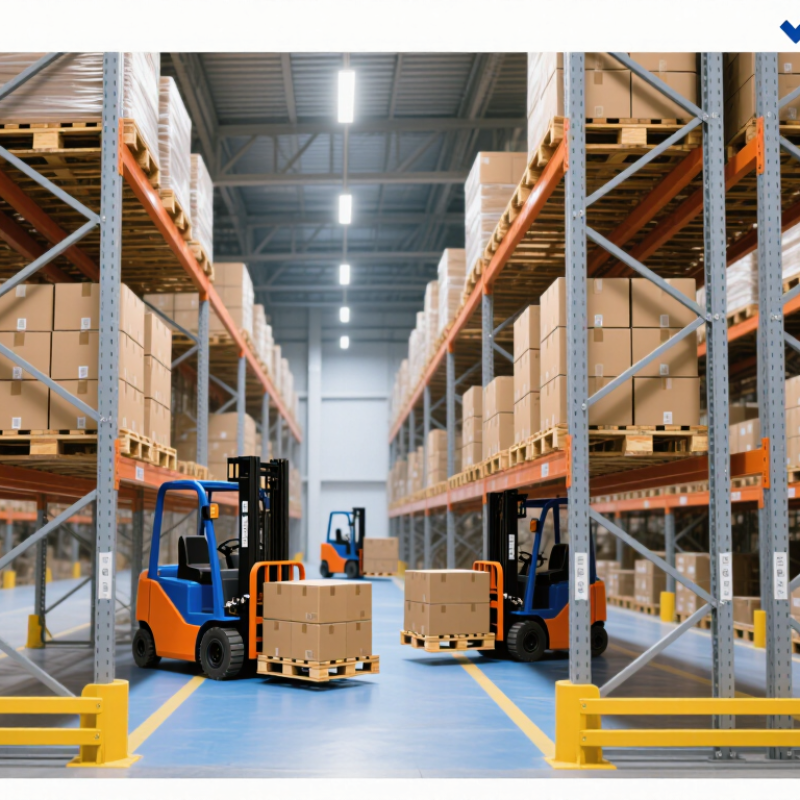
Top 10 Impact Racks Manufacturers for Global Buyers

Understanding Impact Racks and Their Role in Material Handling

Impact racks are pallet storage systems designed to keep goods accessible while reducing damage from everyday handling. They commonly use upright frames, horizontal beams, and protective barriers near traffic lanes. Forklift contact often happens low on an upright, especially at aisle ends or tight turns. A guard can help deflect minor knocks, but it cannot make a rack immune to impact. That distinction matters.

Good rack selection starts with the load. Buyers should check pallet dimensions, unit weight, beam levels, and the type of handling equipment used. A system that fits the building but restricts forklift clearance may create new collision risks. In real warehouses, aisle plans are not always followed perfectly. Small details count: anchor placement, floor condition, and clear load labels all affect daily use. Capacity should be confirmed for the actual configuration, not guessed from appearance.

Regular inspections help teams spot bent uprights, loose anchors, damaged beams, or missing safety clips. Any visible damage deserves prompt assessment by a qualified rack professional; repainting a bent component does not restore its strength. Staff training also matters, because careful driving and correct pallet placement reduce repeated contact. Impact protection is useful, but it works best alongside sensible layout, maintenance, and handling practices.

Key Criteria for Evaluating Impact Rack Manufacturers

Selecting an impact rack manufacturer starts with the collision risks in your facility, not a catalog photo. Forklift speed, vehicle weight, aisle width, and rack geometry all affect the forces involved. Ask how rated capacity is calculated and whether testing reflects your actual bay configuration. Numbers need context. Request test reports, material specifications, and details about weld inspection and protective coatings. A polished finish alone proves little.

Check how the rack connects to the floor and upright frames. Confirm that anchors, base plates, and clearances suit your slab and operating layout. Ask for installation instructions and guidance on inspecting damaged components. Clear documentation matters when a maintenance team needs to make a decision quickly. It is also useful to understand what the manufacturer considers replaceable after an impact, rather than assuming every part can remain in service.

A capable supplier should explain design limits plainly and provide drawings that match the proposed system. Compare lead times, spare-part availability, and technical support, not just unit prices. If a claim sounds vague, ask for evidence. Even a thorough review can miss site-specific risks, so involve qualified rack and facility personnel before finalizing a design. Real warehouses rarely match a perfect drawing. That gap deserves attention.

Key Criteria for Evaluating Impact Rack Manufacturers

Suggested buyer-planning allocation of evaluation effort (%) — not a market survey or an industry-standard weighting.

Prioritize verified load calculations and applicable safety compliance, then assess material quality, customization, project support, delivery, warranty, and documentation. Actual priorities depend on the facility, local requirements, and project specifications.

Profiles of Ten Impact Rack Manufacturers for Global Buyers

Global buyers comparing impact rack manufacturers should look beyond catalogue photos. The profiles below highlight ten practical areas of specialization, rather than claiming a universal ranking. A heavy-duty steel producer may suit demanding forklift traffic. A modular-system maker can offer flexible beam layouts. A seismic-design specialist focuses on bracing and connection details. A high-volume exporter may provide consistent production and shipping documentation.

Other manufacturers stand out through custom engineering for unusual warehouse dimensions or regional fabrication that can simplify replacement-part supply. A coatings-focused producer may help buyers assess finish durability in humid facilities. An automation integrator designs rack structures around conveyor or shuttle equipment. A small-batch workshop can handle specialized configurations, though its capacity may be limited. A service-led supplier emphasizes inspections, repairs, and installation support. The tenth profile is a generalist offering a broad range of rack types, useful when projects need several storage solutions.

Good comparisons rely on verifiable details. Request drawings, rated-load information, material specifications, and examples of comparable installations. Ask how impact damage is assessed and which parts can be replaced. A polished catalogue can still leave gaps. Check lead times and after-sales arrangements in writing, and compare like-for-like specifications. No single profile fits every site; local operating conditions can change the best choice.

Comparing Product Range, Customization, and Quality Standards

When comparing impact-rack manufacturers, look beyond catalog size. A useful range may include selective, drive-in, push-back, and pallet-flow systems, plus guards and other protective components. Check whether the supplier can adapt beam lengths, upright heights, finishes, and accessories to your pallet dimensions and operating conditions. Ask for layout drawings and clearly stated load ratings. A neat catalog is not proof of a suitable design.

Quality depends on documented engineering, material checks, consistent fabrication, and installation guidance. Ask how products align with ANSI MH16.1 and what inspection or traceability records are available; the standard is a design reference, not a guarantee of every installation. MHI’s 2024 Annual Industry Report found that 55% of surveyed organizations planned to increase supply-chain technology investment. That signals continued change in warehouse operations, but it does not prove one rack style fits all. Honestly, buyers can still miss costly details, such as floor conditions or future pallet changes.

Tips: Compare written specifications, not sales claims. Request a sample drawing, verify load assumptions, and clarify who handles site measurements. Check local engineering requirements before ordering. Shortcuts can be expensive.

Global Sourcing Factors: Pricing, Delivery, and After-Sales Support

For global buyers, rack pricing is meaningful only when specifications match. Compare steel thickness, beam capacity, finish, connectors, and packaging—not just the quoted price per frame. Ask whether the quotation includes inspection, export packing, and replacement parts. Small differences add up. A low offer may exclude freight or protective corner guards, leaving buyers with a higher landed cost. Even a careful spreadsheet can miss costs tied to local unloading or installation. Request a written bill of materials and confirm that load ratings apply to the proposed configuration.

Delivery planning needs similar detail. Ask for production and transit estimates separately, and clarify when the schedule begins. Confirm packaging dimensions, shipment tracking, and what happens if production slips. A few weeks matter. Before approving a large order, buyers can request photos of finished components, packing samples, or a pre-shipment inspection. After-sales support should be assessed before payment: check response times, warranty scope, spare-parts availability, and whether installation guidance is provided. Keep records of drawings and communications. One weakness remains: delivery estimates can change after booking, so build in buffer time and agree on a clear process for reporting damage or missing parts.

Top 10 Impact Racks Manufacturers for Global Buyers - Global Sourcing Factors: Pricing, Delivery, and After-Sales Support

Vendor-neutral sourcing framework. It does not rank or identify manufacturers; prices, lead times, warranties, and service commitments must be verified directly with each supplier.

No. Global Sourcing Factor What Buyers Should Compare Information to Request Buyer Check
1 Product definition and scope Confirm whether the offer covers pallet racking, impact-protection components, or both; these are different product scopes. Itemized bill of materials, drawings, dimensions, finishes, and included accessories. Ensure all bidders quote the same specification and quantities.
2 Load capacity and design basis Compare stated capacities only when the load assumptions, configuration, and design conditions match. Design calculations, load tables, configuration limits, and applicable engineering standards. Have a qualified professional review the design for the site and intended use.
3 Quoted price and exclusions Compare the same scope, currency, order quantity, packaging, and delivery basis. A product-only quote is not directly comparable to an installed-project quote. Unit pricing, tooling or customization charges, packing costs, taxes, installation, and quote validity. Request a line-item quotation and document every exclusion.
4 Total landed cost Assess product cost together with freight, insurance, duties, customs clearance, inland transport, and destination handling. Incoterms® rule and named place, shipping assumptions, package dimensions, and country-of-origin details. Calculate landed cost for the actual destination; confirm import charges with a customs broker.
5 Manufacturing lead time Separate production time from booking, transit, customs, and final delivery. Actual timing depends on order scope and logistics. Written production schedule, shipment milestones, and assumptions behind the delivery estimate. Ask how schedule changes and delays will be communicated.
6 Shipping and packaging Check that packaging suits the transport mode and protects components from handling and weather exposure where relevant. Packing method, package count and dimensions, loading plan, and shipping marks. Confirm who is responsible for freight booking, cargo insurance, and damage claims.
7 Quality control and traceability Evaluate documented inspection processes and the supplier’s ability to link delivered items to production records. Inspection plan, material or coating records where applicable, nonconformance process, and sample documentation. Agree inspection and acceptance criteria before production.
8 Standards and compliance documents Requirements vary by product, application, and destination market; do not assume a certificate applies to every configuration. Applicable test reports, declarations, engineering documents, and certificate scope and validity. Verify document authenticity and local regulatory requirements independently.
9 Warranty and claims handling Compare warranty duration, covered components, exclusions, remedy, and claim procedure; terms differ by supplier and product. Full written warranty, evidence requirements, response process, and responsibility for replacement freight. Clarify whether warranty support is available in the destination market.
10 After-sales support and spare parts Assess technical assistance, replacement-part availability, service coverage, and escalation arrangements. Support channels, stated response targets, spare-parts list, service locations, and escalation contacts. Put service commitments and responsibilities in the purchase contract.

FAQS

What should buyers check before selecting an impact rack?

Start with forklift speed, vehicle weight, aisle width, and rack geometry. Ask how capacity ratings were calculated. A catalog photo is not enough.

Which documents help verify rack quality?

Request test reports, material specifications, weld inspection details, and coating information. A smooth finish proves little.

How can buyers confirm the rack fits their warehouse floor?

Check anchors, base plates, slab conditions, and clearances against the actual layout. Have qualified personnel review the installation plan. Floor details are easy to overlook.

What should buyers ask about rack damage after a collision?

Ask which components must be replaced and how damaged parts should be inspected. Do not assume a bent upright can stay in service.

How should international offers be compared?

Match steel thickness, beam capacity, finish, connectors, and packaging. Compare landed costs, including freight, unloading, inspection, and spare parts. Cheap quotes can hide costs.

Which delivery details need confirmation?

Separate production time from transit time, and confirm when the schedule starts. Request packaging dimensions and shipment tracking. Build in buffer time.

How can buyers reduce shipment risks?

For a large order, request photos of finished parts, packing samples, or a pre-shipment inspection. Agree on how missing or damaged parts will be reported.

What after-sales support should be confirmed before payment?

Check response times, warranty scope, spare-part availability, and installation guidance. Keep drawings and messages on file. Even careful checks can miss something.

Conclusion

Impact Racks play an important role in material handling by helping protect rack structures and stored goods in busy warehouses and distribution centers. Choosing the right system starts with evaluating load capacity, durability, safety features, compatibility with existing equipment, and the manufacturer’s ability to meet operational requirements. Buyers should also consider product range, customization options, material quality, and consistency in manufacturing standards.

This overview compares ten types of manufacturer offerings from a global buyer’s perspective, highlighting how product selection and service capabilities can differ. It also considers practical sourcing factors such as pricing, production and delivery timelines, communication, installation guidance, warranty coverage, and after-sales support. By weighing these criteria together, businesses can make a more informed choice and select Impact Racks suited to their facility, budget, and long-term material-handling needs.

Sophia

Sophia

Sophia is a dedicated marketing professional with an exceptional depth of knowledge about her company's products and services. With a keen understanding of market trends and customer needs, she crafts insightful blog posts that not only inform but also engage readers, enriching the company’s online......