Choosing Push-Back Storage in 2026 requires more than comparing rack prices. The right system must match your products, building, equipment, and daily handling habits. A rack can look efficient on paper and still create delays beside the loading dock.
Gwynne Richards, a respected warehouse management author, offers a useful principle: “Storage design must serve the operation, not merely fill the building.” That idea matters when evaluating Push-Back Storage. Consider pallet dimensions, load weights, SKU turnover, and the number of pallets stored per lane. High-volume products may benefit from deep lanes and fast forklift access. Slow-moving goods may justify greater storage density. The choice is rarely universal.
Walk through the proposed layout before approving it. Picture a forklift entering a lane with a wet pallet, a damaged carton, or an urgent order request. Ask where operators will stand, how pallets will be inspected, and whether older inventory can be reached safely. In 2026, warehouse planning should also consider automation readiness, sensor data, energy use, and changing customer demand.
Do not trust density alone.
Push-Back Storage can reduce aisles and increase capacity, but deeper lanes may limit selectivity. LIFO operation may suit some goods, yet it can complicate strict rotation requirements. That trade-off deserves honest review. Measurements may be incomplete. Forecasts may be wrong. A reliable decision combines site experience, engineering checks, supplier evidence, and careful testing. This guide explains the questions that help you choose a safer, more adaptable Push-Back Storage solution.
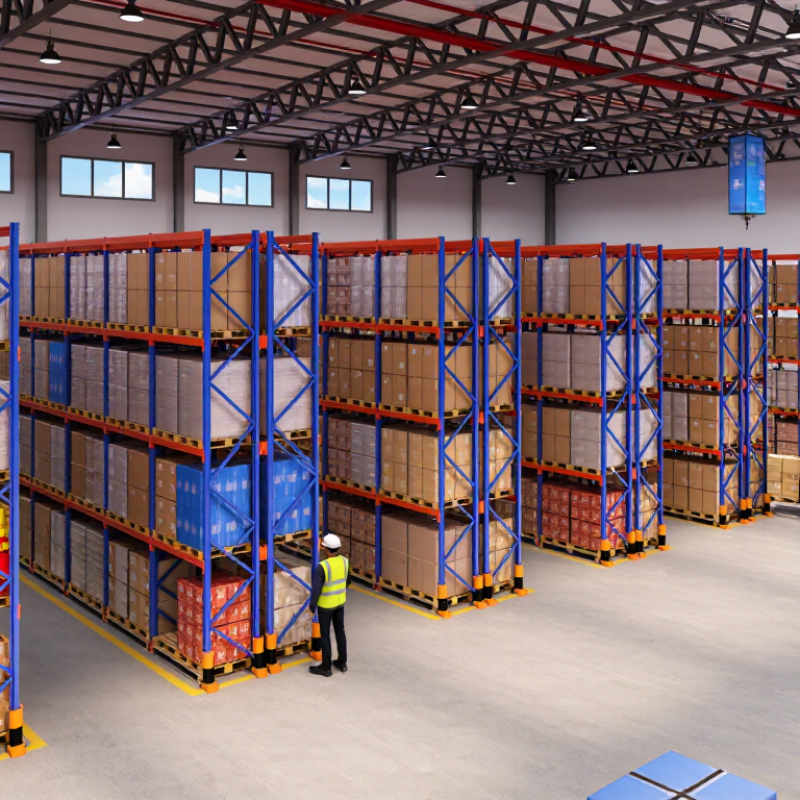
What Push-Back Storage Is and How It Works
Push-back storage uses nested carts or trays that move along inclined rails inside a deep-lane rack. A forklift places pallets from the front, and each new pallet pushes the previous one backward. When operators remove the front pallet, gravity moves the next load forward. The system usually follows a last-in, first-out pattern. It suits products with limited stock rotation and several pallets per item. It also reduces forklift travel because loading and unloading happen from one aisle. The rails need accurate leveling, clean wheels, and controlled pallet dimensions. Small variations can cause hesitation. It is not perfect.
In a warehouse assessment, I would check pallet weight, load depth, lane length, and product turnover before choosing this design. A sloped lane may save floor space, but it can complicate first-expiring-stock control. That matters for temperature-sensitive or date-coded goods. The 2024 WERC DC Measures report places strong warehouse performers near 99.5% inventory accuracy, showing why location discipline remains essential. Push-back lanes should therefore connect with barcode scans and regular cycle counts. The 2024 MHI Annual Industry Report also identifies workforce shortages as a major supply-chain concern. Fewer forklift movements can reduce labor pressure, but operators still need training. A damaged rail, mismatched pallet, or overloaded cart can interrupt an entire lane. In practice, a pilot lane often reveals more than a polished layout drawing. Need clearer rules.
How to Choose Push-Back Storage in 2026?
What Push-Back Storage Is and How It Works
Push-back storage uses inclined rails or carts so pallets are loaded and retrieved from the same aisle. Each lane commonly holds two to six pallets in depth. As lane depth increases, storage capacity per lane rises, but only the front pallet is directly available without moving the pallets behind it. Choose the depth according to inventory turnover, SKU selectivity, pallet uniformity, and the required LIFO operating method.
The chart shows physical pallet positions per lane and direct front access for typical push-back lane depths. Actual capacity depends on pallet dimensions, load weight, rack height, aisle width, and local safety requirements.
Assessing Warehouse Space, Load Types, and Storage Requirements
How to Choose Push-Back Storage in 2026?
Assessing Warehouse Space, Load Types, and Storage Requirements
Choosing push-back storage starts with the building, not the rack. Measure clear height, column spacing, floor load capacity, sprinkler clearance, and forklift travel paths. A six-metre ceiling may lose useful space after lighting, sprinklers, and safety gaps. Record actual measurements. Drawings are often outdated.
Review pallet dimensions, weights, stability, and loading frequency. Push-back systems suit similar pallets stored several positions deep, especially when each product follows a last-in, first-out flow. They are less suitable for fragile loads, mixed pallet sizes, or strict first-in, first-out rotation. Heavy loads need consistent pallet quality and carefully checked rails. Small errors become expensive.
The 2024 MHI Annual Industry Report found that 83% of supply-chain professionals expect increased technology and innovation investment. That supports using slotting data before selecting storage depth. Meanwhile, WERC’s 2024 DC Measures benchmarking places median inventory accuracy near 99.5%, showing how demanding warehouse control has become. Measure SKU velocity, replenishment frequency, and retrieval errors for at least several weeks. Do not rely on one busy day. I would not trust a spreadsheet alone. Test a physical lane with real pallets, forklifts, and operators. That shortcut is tempting, but imperfect. Include inspection access, emergency clearances, and future volume growth before approving the final layout.
Choosing the Right Push-Back Storage Configuration
Choosing the right push-back storage configuration
starts with your inventory, not the rack catalogue. Measure pallet length, width, height, and loaded weight at receiving. Small variations matter. A 1,200 mm pallet may need different clearances after wrapping. Review which stock-keeping units need dense storage and how often each one moves. Push-back systems usually suit last-in, first-out handling, while mixed-date goods may need another solution. That decision deserves operational review.
During site assessments, I check tunnel depth against forklift reach and operator visibility. A deep lane can save aisle space, but it may slow replenishment and increase handling errors. Select two, three, or four pallet positions per lane according to turnover. More positions are not automatically better. Confirm floor capacity, ceiling height, sprinkler clearance, and travel paths with qualified professionals. Load ratings must reflect real pallet conditions, not ideal test samples.
Choose carts or rollers that match pallet bases and surface quality. Damaged boards can catch unexpectedly. Include guides, backstops, and restraint features where the risk assessment requires them. I once underestimated wrapped-load friction during a layout review. The trial exposed uneven movement. A physical test would have caught it earlier. Pilot one lane with representative loads, record push force and retrieval time, then adjust the configuration. Document inspection intervals and train operators using the actual layout. Performance can change after a busy season.
Reviewing Safety, Accessibility, Costs, and Future Expansion
How to Choose Push-Back Storage in 2026?
When evaluating push-back storage, safety should lead the decision. Operators load pallets from the aisle, so poor visibility can cause collisions. Select systems with load stops, guarded lanes, and clearly marked weight limits. Ask for documented inspections and training records, not verbal assurances. During a site review, watch how workers retrieve the rear pallet. A design that looks efficient may feel awkward under pressure.
Accessibility depends on pallet dimensions, forklift turning space, and daily product rotation. Push-back lanes suit several pallets of the same item, but they can slow access to mixed inventory. Leave enough clearance for safe entry and emergency movement. Test the system with actual pallets, including damaged or uneven loads. This step is often skipped. It should not be.
Cost comparisons must include installation, floor preparation, maintenance, training, and lost capacity during construction. A cheaper quote may exclude reinforcement or future repairs. Request a five-year ownership estimate with realistic labor assumptions. Also examine expansion: modular lanes, adjustable rails, and spare structural capacity can simplify later growth. Reserve utility space and aisle width before the building becomes crowded. I have seen warehouses delay expansion because every square meter was already committed. Forecasts are uncertain, so avoid buying maximum capacity without evidence. Review utilization quarterly and revise the layout when order patterns change.
How to Choose Push-Back Storage in 2026? - Reviewing Safety, Accessibility, Costs, and Future Expansion
Typical planning benchmarks for palletized, non-refrigerated warehouse applications. Actual performance and pricing depend on pallet dimensions, load weight, building height, seismic requirements, labor rates, fire protection, and local regulations.
| Push-Back Configuration |
Typical Storage Depth |
Pallet Positions per Lane |
SKU Selectivity |
Accessibility and Product Flow |
Safety and Operating Requirements |
Space Utilization vs. Single-Deep Selective Rack |
Relative Installed Cost Index* |
Future Expansion Suitability |
| 2-Deep Push-Back |
2 pallets |
2 |
High |
LIFO operation from one aisle; relatively quick access to both pallet positions; suitable where each lane stores one SKU or lot. |
Requires compatible pallets, controlled forklift entry, load backstops, rack protection, and operator training. Lower push force than deeper configurations. |
Approximately 10–20% higher |
1.00 baseline |
Very good for phased growth because additional lanes can usually be added without changing the basic operating method. |
| 3-Deep Push-Back |
3 pallets |
3 |
Medium–High |
LIFO operation; provides a practical balance between density and retrieval speed; often appropriate for medium-turn products. |
Requires consistent pallet quality and accurate lane loading. Operators must keep the load centered and avoid entering beneath unstable loads. |
Approximately 20–30% higher |
1.15–1.30 |
Strong option for expansion when product families and pallet profiles are expected to remain stable. |
| 4-Deep Push-Back |
4 pallets |
4 |
Medium |
LIFO operation with greater travel distance inside the lane; best for reserve inventory and products with predictable demand. |
Higher dependence on pallet uniformity, rack inspection, load sequencing, and disciplined forklift handling. Incorrect loading can make inner pallets difficult to retrieve. |
Approximately 30–40% higher |
1.30–1.50 |
Good density for growth, but future changes to pallet size or SKU mix may require lane reconfiguration. |
| 5-Deep Push-Back |
5 pallets |
5 |
Low–Medium |
LIFO operation; high-density reserve storage with reduced direct access to individual pallets and greater dependence on correct stock rotation. |
Requires strict load sequencing, suitable pallet condition, adequate aisle clearance, and frequent inspection of carts, rails, frames, and safety stops. |
Approximately 40–50% higher |
1.45–1.70 |
Suitable when land or building space is constrained; expansion planning should reserve compatible rack bays and forklift capacity. |
| 6-Deep Push-Back |
6 pallets |
6 |
Low |
LIFO operation; maximizes lane depth but limits access to inner pallets and is less suitable for high-SKU-count or strict FIFO operations. |
Highest sensitivity to pallet variation, load sequencing, rack alignment, impact protection, inspection frequency, and operator skill. |
Approximately 50–60% higher |
1.65–1.95 |
Best only where long-term product dimensions, demand patterns, and operating procedures are well established. |
Best safety practice:
Maintain rack inspection records, protect uprights, keep aisles clear, use load backstops, and train operators for the specific push-back system.
Important accessibility note:
Push-back storage is generally a LIFO system. Use selective, drive-in, carton-flow, or pallet-flow solutions when direct access or FIFO is essential.
Cost index note:
The index compares typical system cost by configuration only; it is not a quotation and excludes building work, taxes, fire protection, and material-handling equipment.
Conclusion
Choosing the right Push-Back Storage system in 2026 starts with understanding how it works: pallets are placed on carts or rails and pushed backward along inclined lanes as new loads are added, allowing efficient last-in, first-out storage. Before selecting a system, evaluate warehouse dimensions, aisle space, load weights, pallet sizes, turnover rates, and inventory handling needs. These factors determine the ideal number of storage levels, lane depths, cart design, and pallet capacity.
A suitable Push-Back Storage configuration should balance density with accessibility, safety, and operational efficiency. Consider loading and unloading methods, structural durability, visibility, operator training, and inspection requirements. Costs should include equipment, installation, maintenance, and possible layout adjustments. Finally, plan for future expansion by choosing a flexible design that can accommodate changing inventory volumes, new pallet dimensions, or additional storage lanes without disrupting daily operations.

 Shibang Rack