China Top 10 Stacking Systems Manufacturers for Buyers

Time:2026-11-02 Author:Liam
0%

Choosing among China’s top 10 Stacking Systems manufacturers is not just a price comparison. Buyers need to match equipment to real operating conditions: pallet dimensions, load weight, aisle width, lift height, and daily throughput. A system that looks efficient in a showroom may struggle beside a busy loading dock. Details matter.

Taiichi Ohno, a pioneer of the Toyota Production System, is widely associated with the principle, “Where there is no standard, there can be no kaizen.” It is not a quote about stacking equipment specifically, but it offers a useful lens for evaluating suppliers. Ask how each manufacturer defines capacity, documents safety features, tests equipment, and supports installation. Then compare those answers against your own operating standards. Clear specifications make competing proposals easier to judge.

This guide introduces ten manufacturers for buyers to investigate, not a universal ranking. Product ranges, customization, automation options, and after-sales coverage can differ substantially. Look closely at spare-parts availability, commissioning support, operator training, and compatibility with existing warehouse systems. Request drawings and references for installations with similar loads and workflows. A polished brochure is not proof of long-term performance. Neither is a low quote.

Some questions will remain. Supplier claims may be difficult to compare when test conditions vary, and a site visit can reveal practical constraints that paperwork misses. That is worth admitting. The strongest shortlist is built from verified specifications, credible service commitments, and a clear understanding of what your warehouse actually needs.
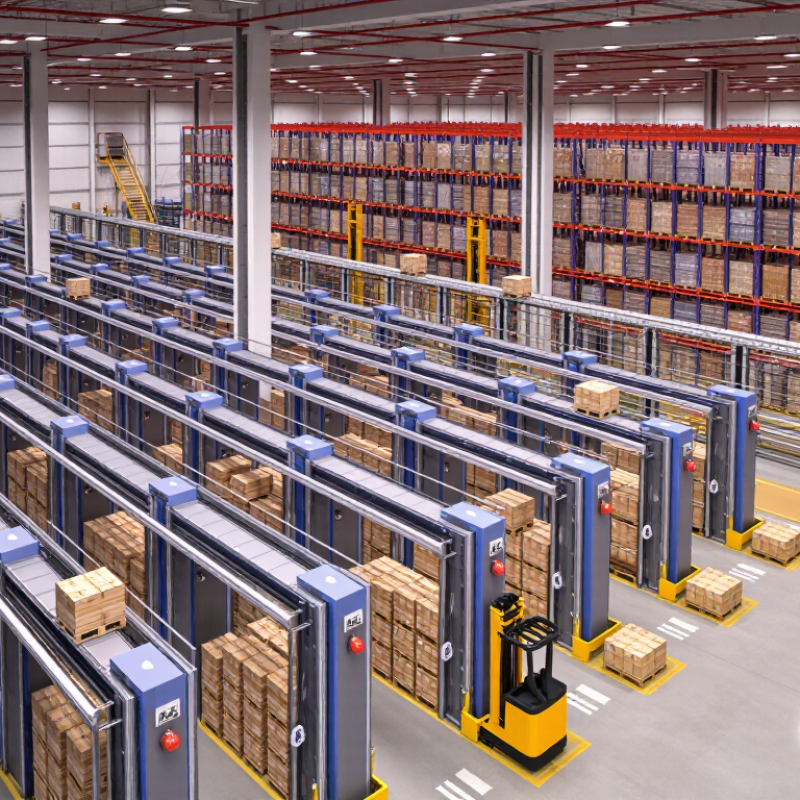
China Top 10 Stacking Systems Manufacturers for Buyers

Understanding Stacking Systems and Their Industrial Applications

Industrial stacking systems move and arrange products into stable, repeatable layers. Common setups include conveyor-fed stackers, palletizing cells, and equipment for stacking sheets or containers. They help reduce repetitive lifting and keep goods ready for storage or dispatch. A carton line may place boxes in a fixed pattern, while sensors check position and load height. Small details matter.

Factories, warehouses, and packaging operations use these systems to manage different products and production speeds. Choosing equipment means checking item dimensions, weight, surface condition, and required output. A stack pattern that works for rigid cartons may fail with flexible bags. Operators should also consider floor space, access for maintenance, guarding, and how the system connects with upstream equipment. Specifications alone cannot predict every jam; trial runs with real products can reveal awkward handling.

Tips: Measure actual loads, not just catalog dimensions. Test the tallest planned stack for stability. Keep sensors clean, and record recurring stoppages. Dust adds up. Recheck settings when packaging changes.

Key Types of Stacking Systems Made in China

Key Types of Stacking Systems Made in China

Chinese manufacturers produce several types of stacking systems for warehouses and production lines. Pallet stacker cranes move loads through high-bay storage racks. Their mast travels along an aisle, while a lifting carriage places pallets at assigned positions. They suit facilities with limited floor space, but aisle dimensions and pallet condition matter. A damaged pallet can disrupt smooth handling.

Robotic palletizers build stable loads from cartons, bags, or cases. They are common near packaging lines, where repeatable stacking helps reduce manual lifting. Layer-forming systems arrange whole rows before placing them onto a pallet. Robotic cells offer more flexibility when package sizes change, although they need careful setup. Fit matters.

Some factories also make sheet, board, and container stacking equipment. These systems collect flat products in layers and transfer each stack to a designated area. Buyers should compare load weight, cycle rate, stack height, and available service support. Ask how sensors respond to misaligned products. A catalog may look precise, yet real packaging varies more than expected. Testing with actual loads can reveal gaps before installation.

Criteria for Evaluating Chinese Stacking System Manufacturers

When evaluating Chinese stacking system manufacturers, look beyond headline capacity and quoted price. Start with the actual load, pallet dimensions, aisle width, and peak throughput at your site. Ask for drawings that show clearances, transfer points, and maintenance access. Ask for evidence.

Check how the system performs across a full shift, not only during a short demonstration. Request load-test records, component specifications, control-system details, and examples of comparable installations. Clarify who handles commissioning, operator training, spare parts, and remote support, including expected response times. Details matter. A polished proposal can still overlook awkward site constraints, so have your engineers review it against real floor plans and workflow data. Compare energy use, maintenance needs, and replacement-part availability alongside the purchase price. Some figures may remain estimates until a site survey is complete. That is worth acknowledging. A reliable supplier should explain assumptions, document changes, and discuss limitations plainly.

China Top 10 Stacking Systems Manufacturers for Buyers — Evaluation Criteria

Suggested weighting for comparing stacking system suppliers. These are buyer-selected evaluation weights, not measured company scores or a manufacturer ranking.

Prioritize product quality and compliance, then assess engineering fit, production capability, delivery performance, after-sales support, and total cost. Adjust the weights to match your project requirements.

Profiles of 10 Chinese Stacking Systems Manufacturers

Profiles of ten Chinese stacking systems manufacturers reveal a market shaped by different loads, layouts, and automation levels. Some focus on pallet stackers for warehouses; others build robotic cells for cartons, bags, or mixed products. Compare rated load, stacking height, cycle time, and footprint against your actual operating conditions. A compact unit may suit a narrow aisle, while a high-throughput line needs reliable conveyors and clear access for maintenance. Small details matter. Ask for drawings, acceptance criteria, and references from installations handling similar products.

The International Federation of Robotics reported 541,302 industrial robots installed worldwide in 2023, including 276,288 in China, in World Robotics 2024. These figures describe industrial robotics overall, not stacking systems alone, but they show the scale of China’s automation base. For each manufacturer, examine controls integration, safety features, spare-parts availability, and commissioning support. Request a sample cycle test using your packaging and pallet pattern; glossy throughput figures may not match real shifts. This comparison is useful, but not complete. Actual performance depends on product variation, operator training, and site conditions.

China Top 10 Stacking Systems Manufacturers for Buyers - Profiles of 10 Chinese Stacking Systems Manufacturers

Buyer-oriented overview of ten stacking-system capability profiles. To avoid implying unverified company-specific facts, these entries describe established system categories and typical applications; they are not a ranked list of named manufacturers.

Profile System type Typical stacking task Common applications Typical configuration Buyer checks
01 Robotic case palletizing Places cartons or cases onto pallets in programmed layer patterns. Food, beverages, household goods, and general manufacturing. Industrial robot, end-of-arm tool, infeed conveyor, pallet position, and safety guarding. Confirm payload, reach, cycle rate, carton-size range, and pallet-pattern support.
02 Gantry palletizing Uses a Cartesian gantry to move products and build pallet loads. Production lines with predictable product flow and defined pallet positions. Overhead linear axes, gripping device, conveyor interface, and control system. Check floor layout, overhead clearance, motion envelope, and access for maintenance.
03 Low-level conventional palletizing Forms product layers near floor level and transfers them to a pallet. Regular case and bag lines requiring repeatable layer formation. Layer-forming conveyor, pushers or transfer mechanism, pallet dispenser, and discharge conveyor. Review product stability, layer pattern, changeover method, and pallet dimensions.
04 High-level conventional palletizing Builds layers at an elevated transfer level and lowers completed loads. Higher-throughput packaging lines with suitable building height. Elevated layer-forming section, layer transfer unit, pallet handling, and guarding. Verify ceiling height, line capacity, maintenance access, and downstream conveying.
05 Bag palletizing Stacks filled bags, often with layer shaping or bag flattening before placement. Grain, feed, fertilizer, cement, and other bagged products. Bag conveyor, alignment or flattening equipment, palletizing mechanism, and optional slip-sheet handling. Test actual bag dimensions, fill variation, surface friction, and required load stability.
06 Drum and pail stacking Places cylindrical containers in stable pallet patterns. Chemical, coatings, lubricants, and other containerized products. Container infeed, orientation control, suitable gripper, and palletizing station. Check container shape, lid security, filled weight, and any hazardous-area requirements.
07 Bottle and crate stacking Groups bottles or cases and stacks them onto pallets or into handling units. Beverage, food, and returnable-container operations. Grouping conveyor, layer or row handling, pallet transfer, and optional empty-pallet supply. Assess container fragility, crate format, hygiene needs, and changeover frequency.
08 Mixed-SKU robotic palletizing Builds pallet loads from different case sizes using programmed patterns. Distribution, e-commerce fulfillment, and lines with frequent product changes. Robot, product identification or recipe control, pattern software, and flexible gripping. Confirm SKU data interface, pattern validation, barcode handling, and exception recovery.
09 Pallet stacking and destacking Stacks empty pallets or separates pallets for automated line supply. Packaging lines, warehouses, and pallet-conveyor systems. Pallet magazine or dispenser, lift or transfer mechanism, sensors, and conveyor interface. Check pallet material, condition tolerance, stack capacity, and compatibility with existing conveyors.
10 Automated storage and retrieval stacker crane Stores and retrieves pallet loads in aisle-based racking using a traveling crane. Warehouses and production stores requiring controlled pallet locations. Aisle crane, load-handling device, racking, conveyors, and warehouse-control integration. Evaluate building dimensions, throughput profile, load unit, fire protection, and software interfaces.

Specification note: throughput, payload, accuracy, and compatibility depend on the selected equipment and application. Obtain validated performance figures, safety documentation, references, and service terms directly from shortlisted suppliers.

Comparing Suppliers and Choosing the Right Stacking Solution

Choosing among China’s stacking-system suppliers starts with the load, not the brochure. Record pallet dimensions, weight range, target throughput, and available floor space. A system handling uniform cartons may struggle with soft bags or uneven layers. Small details matter.

The International Federation of Robotics’ World Robotics 2024 report recorded 541,302 industrial robot installations worldwide in 2023, with 70% in Asia. This is broad automation context, not a measure of stacking-system sales. Compare suppliers on demonstrated cycle time, stack stability, changeover speed, controls, and local service response. Ask for a live test using your own products and pallet patterns. A polished demonstration can still mislead. Request measured results across several shifts, including recovery after jams and changeovers. Also compare spare-parts availability and operator training, not just purchase price. The awkward question is whether quoted capacity remains achievable with real packaging variation. That gap deserves scrutiny. Define acceptance criteria before ordering, then have both parties record results under the same operating conditions.

FAQS

What does an industrial stacking system do?

It arranges products into stable, repeatable layers for storage or dispatch. Systems can handle cartons, containers, or sheets.

What information should we gather before choosing equipment?

Measure actual product dimensions, weight, surface condition, pallet size, target output, and available floor space. Catalog figures may miss real variation.

Can one stacking pattern work for every product?

No. A rigid carton may stack neatly, while a soft bag can sag or shift. Test the actual load.

How can a live supplier trial help?

Run your products and pallet patterns through the system. Check cycle time, stack stability, changeovers, and recovery after jams.

Why check throughput across several shifts?

A short demonstration may hide slowdowns from packaging variation or repeated stoppages. Record results under agreed conditions.

What maintenance details matter?

Keep sensors clean, allow access for maintenance, and track recurring stoppages. Dust builds up.

What should buyers compare besides purchase price?

Compare spare-parts availability, operator training, controls, changeover speed, and local service response. A low quote may not tell the whole story.

How can a facility check stack stability?

Test the tallest planned stack with real products. Confirm guarding and upstream connections, then recheck settings when packaging changes. No checklist catches every awkward jam.

Conclusion

This article introduces Stacking Systems and explains how they support material handling, storage, and production workflows across industries. It outlines common system types made in China, including solutions designed for palletizing, warehouse operations, and automated production lines. By describing their functions and typical applications, the article helps buyers understand which system features may suit different operating environments and capacity requirements.

The guide also presents a practical framework for evaluating Chinese manufacturers, covering factors such as product quality, customization, technical support, production capability, and delivery arrangements. It profiles ten manufacturers without relying on brand promotion, then compares supplier strengths and solution considerations. Buyers can use these insights to define their needs, assess options consistently, and choose a stacking solution that aligns with their facility, workflow, and long-term operational goals.

Liam

Liam

Liam is a dedicated marketing professional with a profound expertise in the industry, where he excels at highlighting the unique advantages of our core products. With a keen understanding of market trends and consumer needs, Liam frequently updates our company’s professional blog, providing......